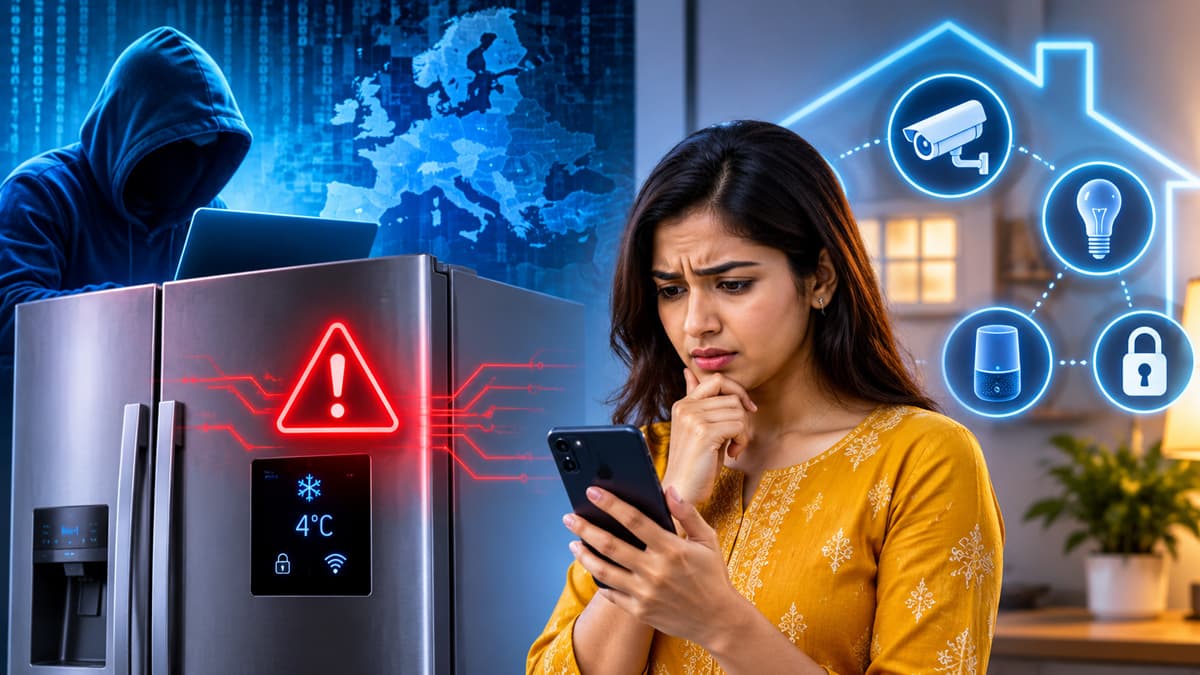
Recent cyberattacks on European supermarket refrigerators have raised questions about smart home device security. For Indian users, understanding these risks and taking simple steps can significantly enhance protection.
Recent cyberattacks on European supermarket refrigerators, which forced systems into a continuous defrost cycle and spoiled large amounts of food, have naturally led to questions about the security of smart home devices here in India.
While the risk of your personal smart home device getting hacked is "quite low for most people, but not zero," according to Mieke Verburgh, senior director of threat labs for Europe at cybersecurity company Malwarebytes, it is still a concern. You might not be personally targeted, but automated programs constantly scan the internet for easy prey, such as devices still using default factory passwords or those with outdated software.
Experts suggest that hackers are unlikely to try and melt down your refrigerator. What's more probable is that they would attempt to hijack devices to create a botnet or to route malicious internet activity, making it appear as though it originates from an ordinary household.
Major manufacturers are aware of these concerns. Samsung, a prominent maker of smart refrigerators, has stated it is "fully committed to providing swift security updates for any identified vulnerabilities" and that its home appliances use proprietary technology to protect the chipset and operating system "under strict security standards." Similarly, LG says a smart fridge will still operate as a regular refrigerator (cooling and freezing) without an internet connection, though it loses its advanced smart functions.
Connected devices with built-in cameras, like smart doorbells or smart TVs, pose their own distinct risks. Karolis Kaciulis, leading system engineer at cybersecurity company Surfshark, warns that these could be exploited to secretly film people at home, potentially leading to blackmail, stalking, or even assisting in planning a burglary.
The European fridge attacks were partly attributed to the use of default universal passwords. British cybersecurity officials noted this vulnerability, while France blamed Iran for the incidents. Some regions, including California and Oregon in the US, and countries like Britain and Australia, have already passed laws to prohibit devices from being preprogrammed with generic universal passwords such as "admin" or "123456" at the factory.
For Indian users looking to bolster their smart home security, here are some practical steps:
- Change default passwords immediately: This is the most crucial first step. Make sure your new passwords are long, complex, and include numbers and symbols. Also, avoid reusing the same password across multiple accounts.
- Enable two-factor authentication (2FA): For devices that rely on cloud-based storage, like many doorbell cameras, turn on 2FA for the associated cloud account. Mieke Verburgh recommends this to add an extra layer of protection.
- Regularly update software and firmware: Just like your smartphones and computers, all your smart devices, your Wi-Fi router, and any related apps need regular updates. These updates often include critical security patches.
- Check device support periods: Be aware of when manufacturer support for your devices will end. Britain's National Cyber Security Centre advises thinking of the support date as a "use by" date, as unsupported devices are easier to hack or might stop working entirely.
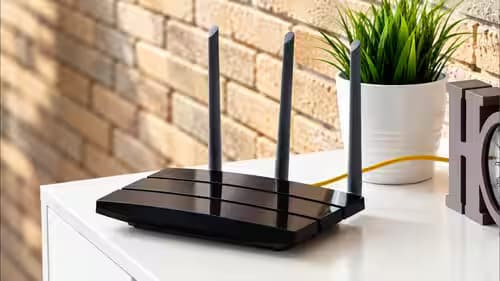
- Disable UPnP on your router: This Universal Plug and Play setting "lets devices open themselves up to the internet without asking you," as explained by Verburgh. Turning it off usually won't cause issues, as most modern smart devices connect to manufacturer cloud services without needing open ports.
- Isolate smart devices on a guest network: Most modern home routers allow you to set up a secondary or "guest" Wi-Fi network. The FBI recommended in 2019 that your fridge and laptop "should not be on the same network," advising to keep sensitive data on a separate system from your other Internet of Things (IoT) devices.
- Disable unused features: Turn off any features you are not actively using, such as remote access. This reduces the number of potential entry points for attackers.
- Audit your devices and camera access: Take an inventory of all your smart home devices and understand how they connect to the internet. Regularly check who has access to your camera or doorbell apps.
- Position indoor cameras carefully: If you use indoor cameras, point them away from private areas. Some models offer physical lens covers or can be scheduled to record only at specific times.
By following these straightforward steps, Indian consumers can significantly enhance the security of their smart homes and protect themselves from potential cyber threats.