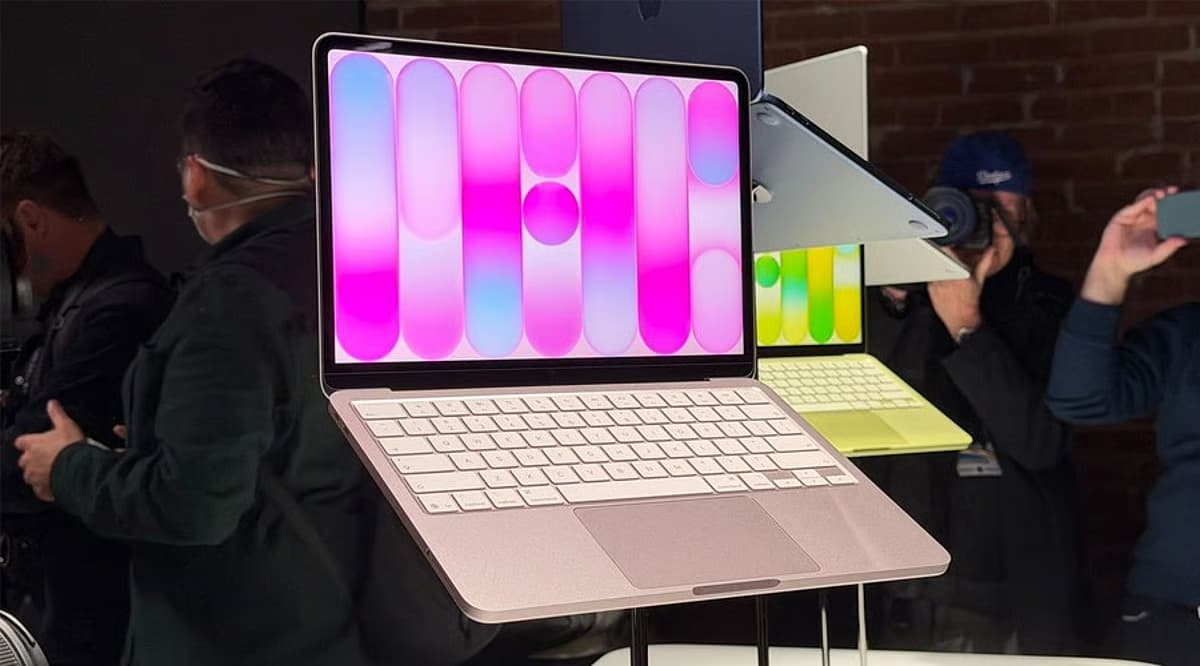
Apple is reportedly holding its third launch event in two months on October 29, with rumours pointing to a touch-screen MacBook Pro and a new OLED iPad mini. This marks a potentially significant shift for Apple's laptop strategy.
Apple is gearing up for what could be its third product launch event in just two months, with invitations reportedly sent out for an October 29 event in Los Angeles. The event, themed 'Pro and tell', is expected to shine a spotlight on Mac and iPad lineups, according to Chinese tech publication 36Kr.
Combining information from Bloomberg, analyst Ming-Chi Kuo, and recent leaked code, the main lineup for this event is tipped to include a touch-screen MacBook Pro, a new OLED iPad mini, and an iMac equipped with the M6 chip. For Indian buyers, the most buzzworthy rumour is the potential for a MacBook Pro with a touch display, a significant departure from Apple's long-standing position on touch-enabled laptops.
MacBook Pro: Touchscreen, OLED, and Dynamic Island
The high-end MacBook Pro, reportedly coming in 14-inch and 16-inch sizes, is expected to feature an OLED touch screen. This detail comes from Bloomberg journalist Mark Gurman. Beyond touch, the familiar notch on MacBooks is said to be upgraded to a Dynamic Island design, similar to what we've seen on iPhones, and the body weight is also expected to be significantly reduced.
Analyst Ming-Chi Kuo provided further insights from the supply chain, indicating that the new device will adopt on-cell touch technology. This means the touch sensing structure would be integrated directly onto the display panel, allowing for a thinner screen assembly.
The benefits of an OLED screen are immediate: pixels can turn off completely when displaying black, leading to true blacks and greatly reduced halo effects around high-contrast images. This would be a welcome improvement for movie watching, photo viewing, and gaming on a MacBook Pro, bringing it in line with many high-end Windows laptops already available in India that feature similar high-quality OLED displays.
The Dynamic Island is also said to offer more utility for the MacBook Pro screen. Current Macs can already display live activities from iPhones, such as timers and playback status. The Dynamic Island could house this information, freeing up space in the Mac status bar for more icons.
Learning from the Touch Bar's Past
This isn't Apple's first foray into touch interaction on a Mac. Ten years ago, the company introduced the Touch Bar with the 2016 MacBook Pro. This OLED multi-touch screen replaced the function keys, adapting its options based on the application in use. For instance, it allowed users to switch Safari tabs or adjust images in Photos.
While it was an attempt to introduce touch without causing arm fatigue (a concern Steve Jobs had voiced about traditional touchscreens), the Touch Bar ultimately fell short. Users found it difficult to build muscle memory because function locations kept changing, and it required looking down from the main screen. Developers also found it laborious to create exclusive interactions for such a small, niche screen.
Apple eventually phased out the Touch Bar, bringing back physical function keys with the M1 Pro and M1 Max MacBook Pros in 2021. Apple's official press release at the time even highlighted the return of tactile feedback, acknowledging what professional users valued.
A New Approach to Touch Interaction
Now, five years later, touch control is once again a key update point for the MacBook Pro. This time, the approach appears to be more intuitive: retaining the keyboard and trackpad while allowing the system to adjust interactions based on the input method. When a mouse is in use, the interface will maintain the familiar desktop layout. When fingers are used, menus and operation areas will adapt for touch.
Hints of this strategy have already been seen with direct touch support appearing in macOS 27 and pull-to-refresh functions in some applications. This suggests Apple is working to make its cursor-centric system more finger-friendly. Imagine zooming photos with a tap, swiping through web pages directly, or tapping a play button during a meeting, then returning to your keyboard for normal workflow.
What This Means for Indian Consumers
For Indian buyers, a touch-screen MacBook Pro would be a compelling alternative to premium Windows laptops like Dell's XPS series or HP's Spectre line, many of which already offer touch and OLED displays. While current MacBooks offer strong performance with Apple Silicon, the addition of a touch interface could provide a more versatile user experience, especially for creative professionals and students who might appreciate direct interaction with their screen.
However, as with all leaks, official confirmation is pending. Details on India-specific pricing, availability, and exact configurations will only be known if and when Apple makes an official announcement. It remains to be seen how this new touch strategy will be received compared to its predecessor.
The New OLED iPad Mini
Alongside the MacBook Pro, the event is also expected to introduce a new OLED iPad mini. While specific details on this compact tablet are scarce in the current reports, an OLED display would bring similar visual benefits to the iPad mini as to the MacBook Pro, including deeper blacks and better contrast. This could make it a more attractive option for media consumption and portable productivity for users in India.