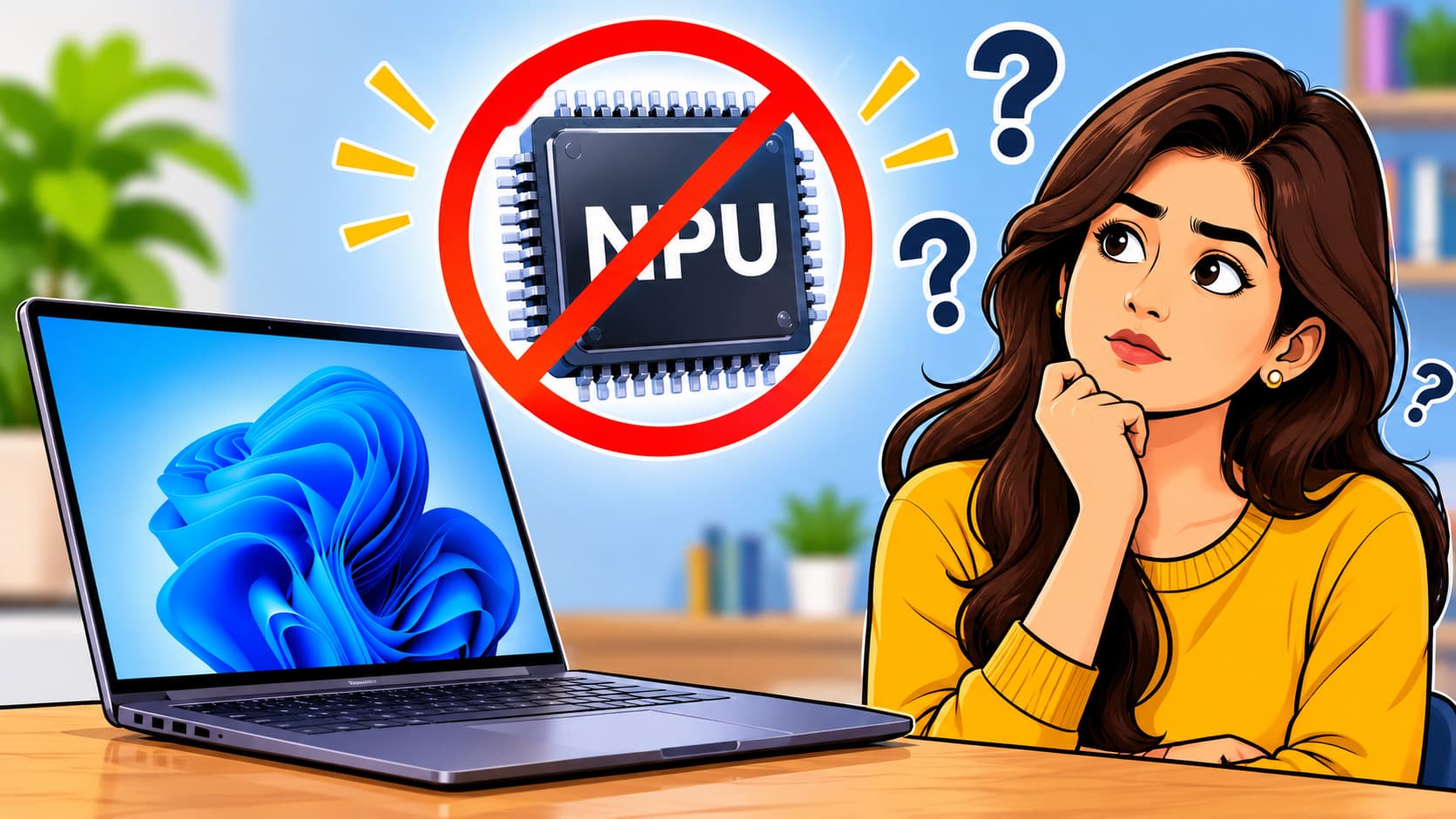
By late 2026, the dedicated NPU in laptops is no longer the main selling point, with most new models including one. Indian buyers should prioritise other specs like RAM, as the Copilot+ PC brand fades and local AI apps often use GPUs instead.
Anyone shopping for a Windows laptop in India this festive season will notice a significant shift: the NPU, a dedicated processor for AI tasks, which was a major selling point for Copilot+ PCs just two years ago, is no longer the primary differentiator. By late 2026, the landscape looks quite different, as almost every new notebook includes an NPU, diminishing its unique appeal.
This trend, highlighted by Notebookcheck, means Indian buyers need to look beyond the NPU when making their purchasing decisions. The focus is shifting to other specifications, particularly memory, which now makes a real difference in a laptop's performance and capabilities.
The Fading Allure of Copilot+ PCs
Microsoft initially positioned the NPU as the ticket to its Copilot+ PC ecosystem, promising exclusive features like Recall. However, the Copilot+ brand itself appears to be fading. Surface chief Brett Ostrum told Windows Central in September that the 2026 Surface devices are no longer called Copilot+ PCs, even if they meet the technical requirements. While Microsoft hasn't officially ended the brand, and its specifications still define it, this move by a key internal executive suggests a quiet pivot. For Indian consumers, this means the 'Copilot+' label might not carry the same weight it once did.
Defining a Copilot+ PC: More Than Just an NPU
Despite the brand's diminishing prominence, Microsoft still maintains official specifications for a Copilot+ PC. These rules require a laptop to have an NPU capable of more than 40 TOPS, which stands for 40 trillion operations per second. Additionally, it must include 16GB of DDR5 or LPDDR5 memory and a 256GB SSD.
Qualifying processors for these machines include AMD's Ryzen AI 300 and 400 series, Intel's Core Ultra 200V and 300V series, and Qualcomm's Snapdragon X series. It's crucial to note that Microsoft states plainly that devices with less than 16GB of RAM are not considered Copilot+ PCs, even if their NPU meets the speed requirement. This particular detail is vital for Indian buyers, as many budget-friendly options might cut corners on RAM.
Copilot+ Features: What's Exclusive, What's Not
The list of features reserved for Copilot+ PCs is surprisingly short. It includes Recall, Click to Do, improved Windows search, and the agent in Settings. Creative tools also get a boost with object select in Paint, Super Resolution in Photos, and the perfect screenshot option in the Snipping Tool. Live Captions on Copilot+ PCs can translate from more than 40 languages, though only into English and Simplified Chinese.
However, many popular AI features do not rely on the NPU at all. Paint's Cocreator and Image Creator in Photos, for instance, run in Microsoft's cloud and only require a Microsoft account. This means that for many common AI-powered tasks, having a dedicated NPU on your laptop isn't a prerequisite, lessening its unique selling proposition.
Why NPU TOPS Figures Tell Only Half the Story
When it comes to raw processing power for AI, Notebookcheck reports that the NPU hardly separates one laptop from another anymore. All the new chips entering the market are clearing the 40 TOPS threshold set by Microsoft. AMD's Ryzen AI 400 series, for example, lists at 50 to 60 TOPS, topped by the Ryzen AI 9 HX 475.
Qualcomm's Snapdragon X2 Elite and X2 Plus reportedly reach an impressive 80 TOPS. Even Intel's Panther Lake chips achieved up to 50 TOPS in Notebookcheck's Core Ultra X9 388H review. The key takeaway, as Notebookcheck highlighted, is that higher NPU TOPS numbers don't unlock any additional Windows features, with the exception of some image features like generative fill in Paint, which are limited to Snapdragon chips. For the average Indian user, chasing higher TOPS figures on a sticker might not translate to any tangible benefit.
GPUs Step Up for Local AI Tasks
Microsoft is also quietly expanding local AI capabilities to PCs without a dedicated NPU. Since June, the Windows language model APIs, built on the small Phi Silica model, have been running experimentally on GeForce RTX 30 GPUs and newer, provided they have at least 6GB of VRAM. TechRadar reported this development, indicating a shift towards leveraging existing GPU power.
While this currently requires an Insider build and Developer Mode, it signals a broader approach to local AI. For those interested in running language models offline, such as Ollama, LM Studio, and llama.cpp, the NPU matters even less. These popular tools primarily run on the GPU and CPU, as PCWorld noted a year ago. Ollama's hardware page lists GPUs from Nvidia, AMD, and Apple but doesn't mention NPUs at all. A request for NPU support in LM Studio is still an open discussion on GitHub. This confirms that for serious local AI work, a capable GPU is far more important than an NPU.
The Rising Cost of RAM: A Major Factor for Buyers
The real bottleneck and cost driver in new laptops right now is memory. Notebookcheck reported in June that a 32GB DDR5 kit cost about $439, a substantial increase from $80 to $120 a year earlier. Manufacturers have responded by raising prices by 15% to 30%.
This trend shows no signs of slowing down. Market researcher TrendForce expects DRAM contract prices to rise another 10% to 15% in the fourth quarter. To compensate for these soaring memory costs, PC makers are already cutting SSD capacity in many models. For Indian buyers, this global price hike means that laptops with sufficient RAM will likely become more expensive, or you might find configurations with less storage than expected.
Making Smart Choices: Prioritising Specs for Indian Buyers
Given these market dynamics, Indian consumers need to be strategic when buying a new laptop. The NPU should be treated as a bonus, not the primary reason for a purchase. For those specifically wanting the Copilot+ features, remembering the 16GB RAM minimum is absolutely critical. Many cheaper Snapdragon laptops, as highlighted by Windows Central in Black Friday deals, come with just 8GB of RAM. Examples include a Surface Laptop with a Snapdragon X Plus and 256GB of storage for $699.99, and an HP OmniBook 3 for $399.99.
While Windows Central suggests 8GB might suffice for office work on Windows on Arm, these laptops do not qualify as Copilot+ PCs, meaning you won't get features like Recall or Click to Do. For running local language models, you should plan on at least 32GB of RAM or a dedicated GPU. Without dedicated memory, the integrated GPU shares system RAM, which can severely limit the size and performance of such models.
Final Word: Focus on Your Real Needs
Before you buy, honestly evaluate whether you even want or need the Copilot+ AI features, particularly Recall. If these features aren't a priority, you can always turn them off, as guides to Copilot and Recall suggest. Instead of fixating on the NPU's TOPS figure, which has become less of a differentiator, focus on overall performance and battery life. These aspects, as Notebookcheck's reviews often show, provide a more accurate picture of a laptop's real-world capabilities.
With memory prices on the rise, Indian consumers should prioritise securing a laptop with adequate RAM for their current and future needs. A machine with 16GB of RAM is a wise minimum investment for a smooth Windows experience and access to Copilot+ features, should you desire them. For more demanding AI tasks, a dedicated GPU or 32GB of RAM is essential. Make your decision based on what truly enhances your daily use, rather than a single, less relevant spec.