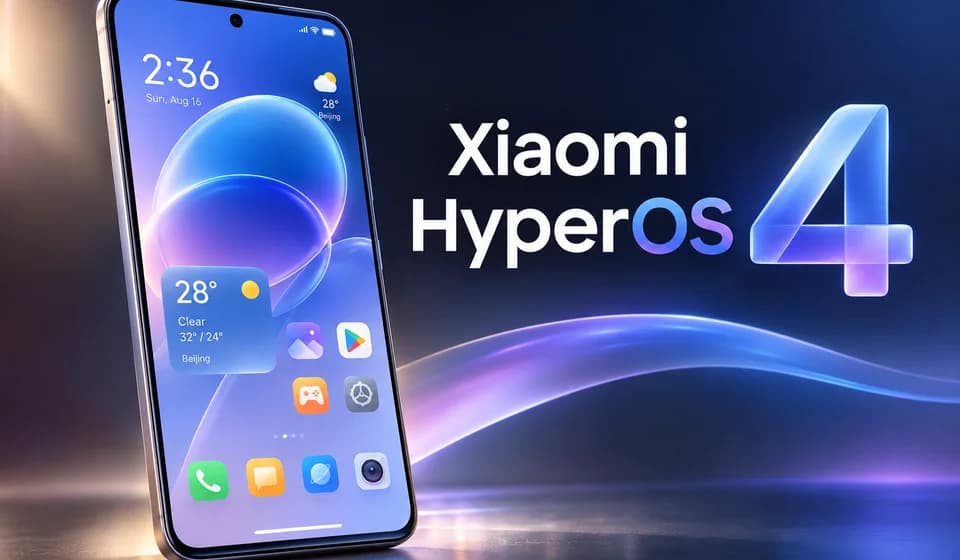
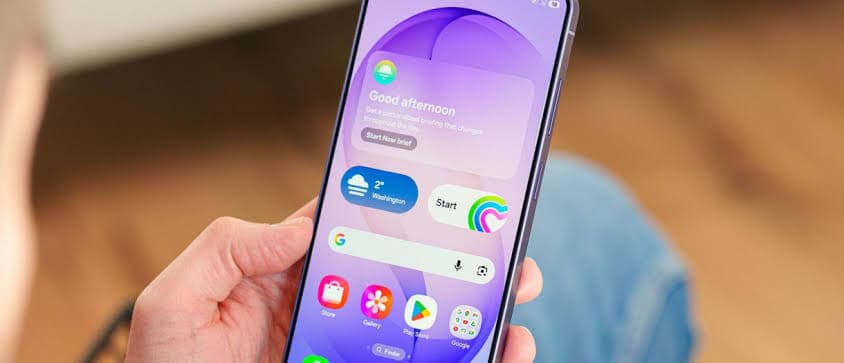
Xiaomi has started rolling out its HyperOS 4 update globally from November 2026, bringing a refreshed glass-style design and new AI capabilities. Indian users can expect the update around the same general timeline, though some advanced AI features remain exclusive to China for now.
Xiaomi has begun rolling out HyperOS 4 globally, marking a clear break from its long-standing MIUI identity. The update, which starts in November 2026, is expected to reach more than 80 devices worldwide in three waves through December 2026. For Indian users, the good news is that the country is following the same general schedule, though specific rollout dates will vary by device model and carrier.
A Fresh Look: Effortless Aesthetics
The first thing users will likely notice is the new design, dubbed 'Effortless Aesthetics'. This introduces a soft, glass-style interface across icons, folders, and lock screens, complete with subtle blur and light effects. While some might find its look reminiscent of Apple's glass-style interfaces, Xiaomi hasn't publicly drawn that comparison.
Beyond just looks, the interface aims for greater fluidity. Users should find folders resizing more easily, widgets grouping together with less hassle, and smoother transitions when switching between portrait and landscape orientations. This all points to a more refined and responsive user experience on supported devices.
AI Capabilities: Global vs. China
A significant shift with HyperOS 4 lies in its AI capabilities, though there's an important distinction for global users, including those in India. In China, Super XiaoAI 2.0, powered by Xiaomi's own MiMo language model, promises advanced multi-step task execution. For example, a single command could tell the assistant to find a photo, crop it, and then share it, streamlining what would typically be three separate actions.
This China-specific version also features an Expert Mode, allowing the assistant to work directly within supported apps, rather than just launching them. Additionally, AI Voice Notes can convert recorded conversations into summaries, action item lists, or mind maps, saving time spent replaying long meetings.
However, it's crucial to note that Super XiaoAI 2.0 and its MiMo-based features are currently tied to Chinese software builds. Global devices will instead run Xiaomi's HyperAI tools, and several AI features will arrive in stages through later updates rather than with the initial HyperOS 4 release. So, the full AI experience seen in China may not be immediately available to Indian users.
Under the Hood: Performance and Connectivity
Xiaomi has also focused on performance enhancements. Internal tests conducted on the Xiaomi 17 Ultra, comparing HyperOS 3 and HyperOS 4 after nine hours of active use, indicated faster app launches and steadier playback. While these are lab results and real-world gains might vary, the intent for improved speed and efficiency is clear.
Connectivity also gets an upgrade with HyperConnect, Xiaomi's cross-device system. This now allows one Xiaomi device to control the camera of another connected device. Additionally, a tablet can directly share a phone's mobile data, offering specific, confirmed functions for multi-device workflows.
Enhanced Privacy Measures
Security and privacy are also points of focus. HyperOS 4 introduces two new layers: Quantum-Level Encryption and Edge-to-Cloud AI Data Security. Quantum-Level Encryption involves advanced cryptography designed to withstand quantum-computing threats, though for now, it applies only to key exchange within specific end-to-end encrypted scenarios. Edge-to-Cloud AI Data Security focuses on on-device storage security and safe data transfer, restricting privacy computation in the cloud to select phones.
When to Expect It in India
The global rollout covers more than 80 models across Xiaomi, Redmi, and Poco phones and tablets, distributed in three batches from November to December 2026. Indian users can expect to follow this general global timeline, though Xiaomi has not published an India-specific schedule. The exact Android version might also vary by device, with most supported models moving to Android 17.
The first wave of devices slated to receive HyperOS 4 includes recent flagship and mid-range models, such as the Xiaomi 17 series, select Redmi Note 15 models, and newer Poco phones. To check for updates, it's always best to refer to the update log for your specific mobile device.
What This Means for Indian Users
While the new glass-style design and general performance improvements sound promising, the real test for HyperOS 4 in India will be how well its HyperAI tools, memory management, and connectivity functions work in everyday use. The staged rollout of certain AI features means Indian users will need to watch for subsequent updates to get the full range of smart capabilities.