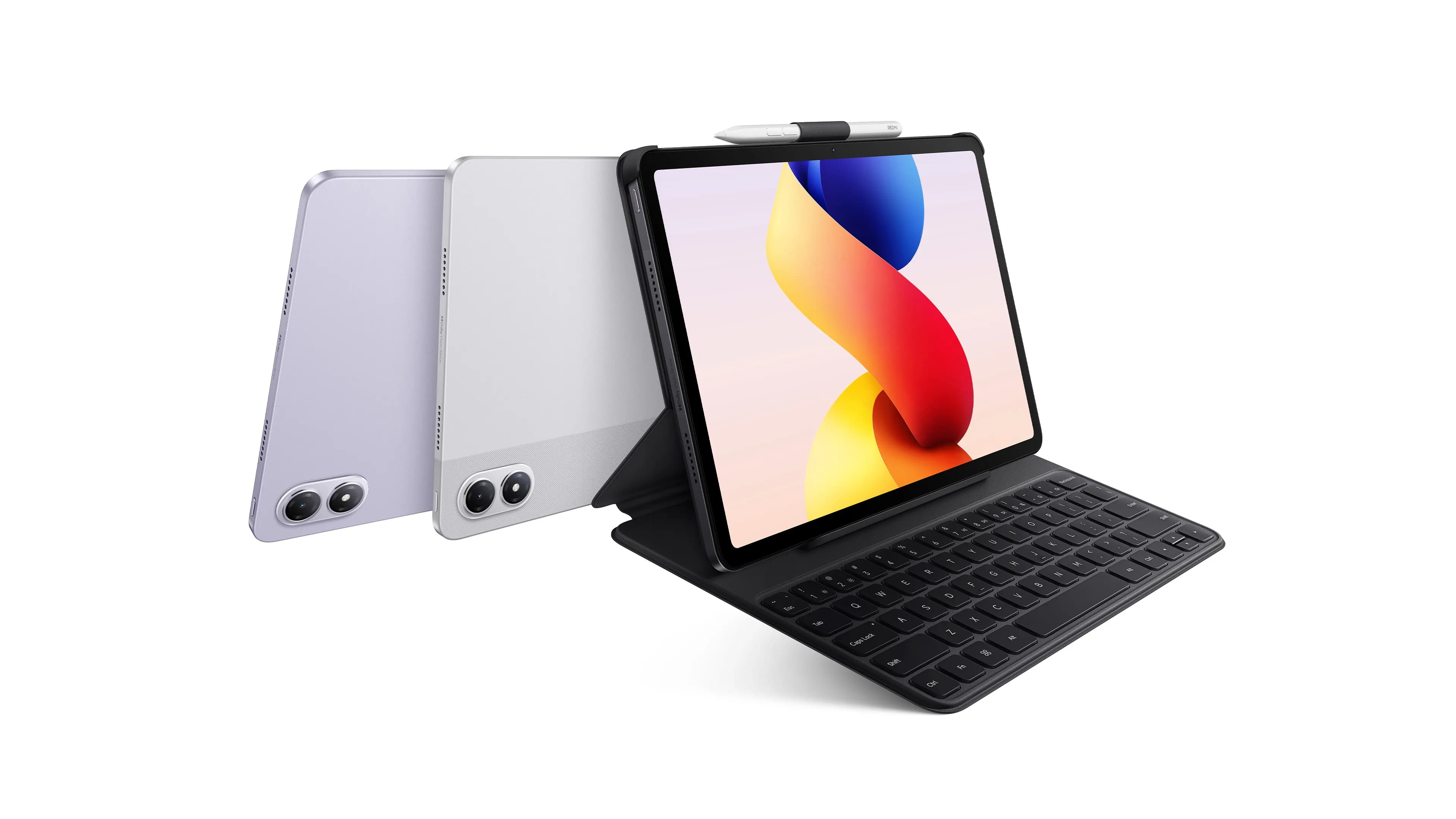
The Redmi Pad 3 (4G) has recently received multiple certifications in Asia, signaling that its launch is just around the corner. Key specifications, including a larger battery and expanded memory options, have surfaced, positioning it as a successor to the Redmi Pad 2.
The Redmi Pad 3 (4G) appears to be nearing its official launch, with the tablet reportedly bagging approvals from multiple certification authorities. According to a report by Gizmochina, which cites AndroidTreasure, the device with model number 26104RPF2G has been approved by Taiwan's NCC and Thailand's NBTC.
While the NBTC listing primarily confirms the device's moniker, the NCC certification provides more concrete details regarding its configurations. Indian buyers can likely expect the Redmi Pad 3 (4G) to be available in three memory variants: 4GB RAM with 128GB storage, 6GB RAM with 128GB storage, and a top-tier 8GB RAM with 256GB storage. A welcome addition is microSD card support, allowing for storage expansion up to a substantial 2TB.
One of the most notable upgrades tipped for the Redmi Pad 3 (4G) is its battery. TÜV Rheinland database listings point to a BN90 battery with a rated capacity of 9,820mAh, translating to a typical capacity of 10,000mAh. This is a significant jump from the 9,000mAh battery found in the Redmi Pad 2. The tablet is also expected to ship with a 15W MDY-18-EJ charger in the box, though a separate 33W MDY-16-EH adapter is mentioned, suggesting faster charging capabilities if you buy a compatible power brick.
Connectivity options for the Redmi Pad 3 (4G) include 4G with VoLTE support, Bluetooth, and dual-band Wi-Fi (2.4GHz and 5GHz). However, it will not support the newer Wi-Fi 6E standard. The tablet is also said to carry an IP52 rating for dust and splash resistance, offering a basic level of protection against everyday elements.
How It Compares to the Redmi Pad 2
To put these new details into context, the Redmi Pad 2 (4G), which launched in June 2025, featured an 11-inch 2.5K LCD with a 90Hz refresh rate. It was powered by the MediaTek Helio G100-Ultra chipset, came with an 8-megapixel rear camera and a 5-megapixel front camera, and had a 9,000mAh battery with 18W charging. Audio was handled by four speakers with Dolby Atmos.
On paper, the Redmi Pad 3 (4G)'s larger battery capacity is a definite plus for users who prioritise longer usage times. The increased storage options, especially the 2TB microSD support, are also a significant advantage for those needing more space for apps and media. The inclusion of a 15W charger in the box is decent, but the potential for 33W charging is a good upgrade, even if it requires a separate purchase.
What This Means for Indian Buyers
For Indian consumers, the Redmi Pad 3 (4G) will likely aim for the budget-friendly to mid-range tablet segment. The continued reliance on 4G connectivity in late 2026 might be a point of consideration for some, as 5G adoption grows rapidly across India. However, for users primarily looking for a media consumption device or an educational tool that doesn't need cutting-edge cellular speeds, 4G is usually sufficient.
The success of the Redmi Pad 3 (4G) in India will heavily depend on its pricing strategy. If it can offer these upgraded features, especially the bigger battery and storage, at a competitive price point, it could be a strong contender against other budget tablets on the market. We'll have to wait for the official announcement to see how Xiaomi positions this new tablet.
Is a 5G Version Also Coming?
In related news, a separate Redmi Pad 3 tablet with model number 2610FRP38G has also been approved by the UAE’s TDRA. This particular listing could indicate that a 5G version of the Redmi Pad 3 is also in the pipeline, which would definitely be a more appealing option for some Indian users seeking faster network speeds.