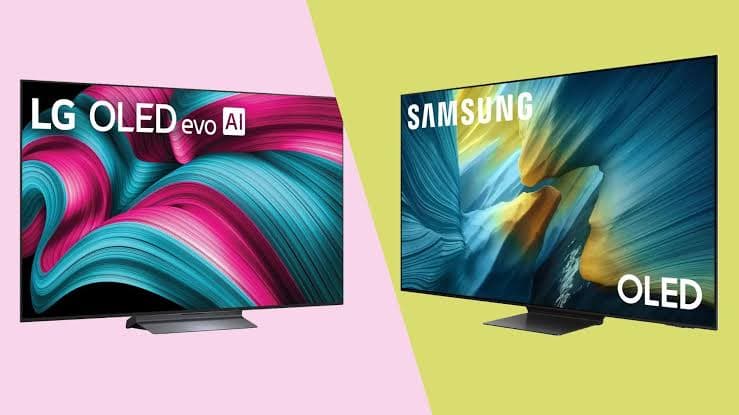
LG and Samsung dominate the global OLED TV market, but their display technologies differ significantly. Understanding these panel types, software, and brand histories is important for Indian consumers choosing their next television.
LG and Samsung continue to lead the charge in the global OLED television market, offering a range of models that appeal to different viewing preferences. For Indian buyers considering a premium TV upgrade, the choice often boils down to the core display technology these giants use. According to Engadget, understanding the distinctions between LG's WOLED and Samsung's QD-OLED is crucial.
The OLED Panel Landscape: WOLED, QD-OLED, and RGB Tandem
OLED televisions primarily come with three types of display panels: WOLED, QD-OLED, and the less common RGB Tandem OLED. Each has distinct characteristics that affect picture quality, brightness, and suitability for different environments.
LG's WOLED: A Mature Technology for Varied Homes
LG pioneered WOLED technology, entering the OLED field in 2010. WOLED panels use a white light source that passes through red, green, blue, and a white filter to create colors. The white subpixel layer helps boost brightness after filtering, which can be beneficial in brighter viewing conditions, a common scenario in many Indian living rooms. However, this approach can sometimes come at the cost of text clarity.
Engadget notes that WOLED is the main technology found in LG televisions and is considered ideal for high ambient-light environments, making it a strong contender for homes where controlling sunlight or room lighting is not always possible.
Samsung's QD-OLED: Rich Colors, But Mind the Glare
Samsung re-entered the OLED TV market in 2022 with its QD-OLED technology, aiming to carve out a distinct niche. Unlike WOLED, QD-OLED uses a blue light source that converts colors via red and green quantum dots, rather than filtering. This method allows for a much wider color gamut and is significantly more energy-efficient, theoretically leading to longer panel lifespan. QD-OLEDs are often considered the gold standard for HDR displays due to their superior color saturation.
However, QD-OLED panels have a notable drawback for bright spaces: strong light hitting the panel can cause a magenta glare. While Samsung's QD-OLED offers best-in-class color for consumer televisions, it struggles in rooms with high ambient light, meaning Indian buyers with brightly lit living rooms might find reflections a problem.
RGB Tandem OLED: The High-Brightness Premium Option
There's also RGB Tandem OLED, which uses multiple emissive layers and a striped subpixel layout to achieve high brightness, reaching over 1,000 nits per pixel on some models. While impressive in brightness, Engadget points out that without quantum dot technology, RGB Tandem panels tend to have poorer color accuracy compared to Samsung's QD-OLEDs. These panels also carry a premium price tag due to high manufacturing costs.
Beyond the Panel: Software and Brand Trust
The display panel is just one part of the equation. Software and brand reputation also play a major role. Samsung's OLED television models currently lack Dolby Vision support, relying instead on HDR10. In contrast, many LG OLEDs offer Dolby Vision, which could be a deciding factor for cinephiles.
Operating systems also differ: LG's WebOS is supported for upwards of five years, while Samsung's Tizen OS will receive up to seven years of updates. For long-term use, Samsung has a slight edge in software longevity on paper.
Brand trust has also seen its share of ups and downs. Samsung has faced criticism for inconsistent quality control and for not always providing clear information about the panel technologies used in certain models. LG, despite a generally more consistent track record, faced widespread backlash over privacy concerns when its terms of service allowed recording user conversations and selling them to advertisers, a controversy that led to a public statement from the company.
Making Your Choice in India
For Indian consumers, the decision between LG's WOLED and Samsung's QD-OLED largely depends on your specific viewing environment and priorities. If your viewing space is often bright, or if you prefer a television that handles ambient light well, LG's WOLED might be a more practical choice, even with its potential trade-off in text clarity. If you can control the lighting in your room and prioritize vibrant, wide-gamut colors and superior HDR performance, Samsung's QD-OLED could be the better fit, provided you are aware of the glare potential.
Consider also your content consumption: if Dolby Vision is a must-have for your streaming habits, LG has the advantage. Ultimately, a television is a significant investment, and understanding these underlying technologies, as highlighted by Engadget, helps make an informed decision that suits your home.