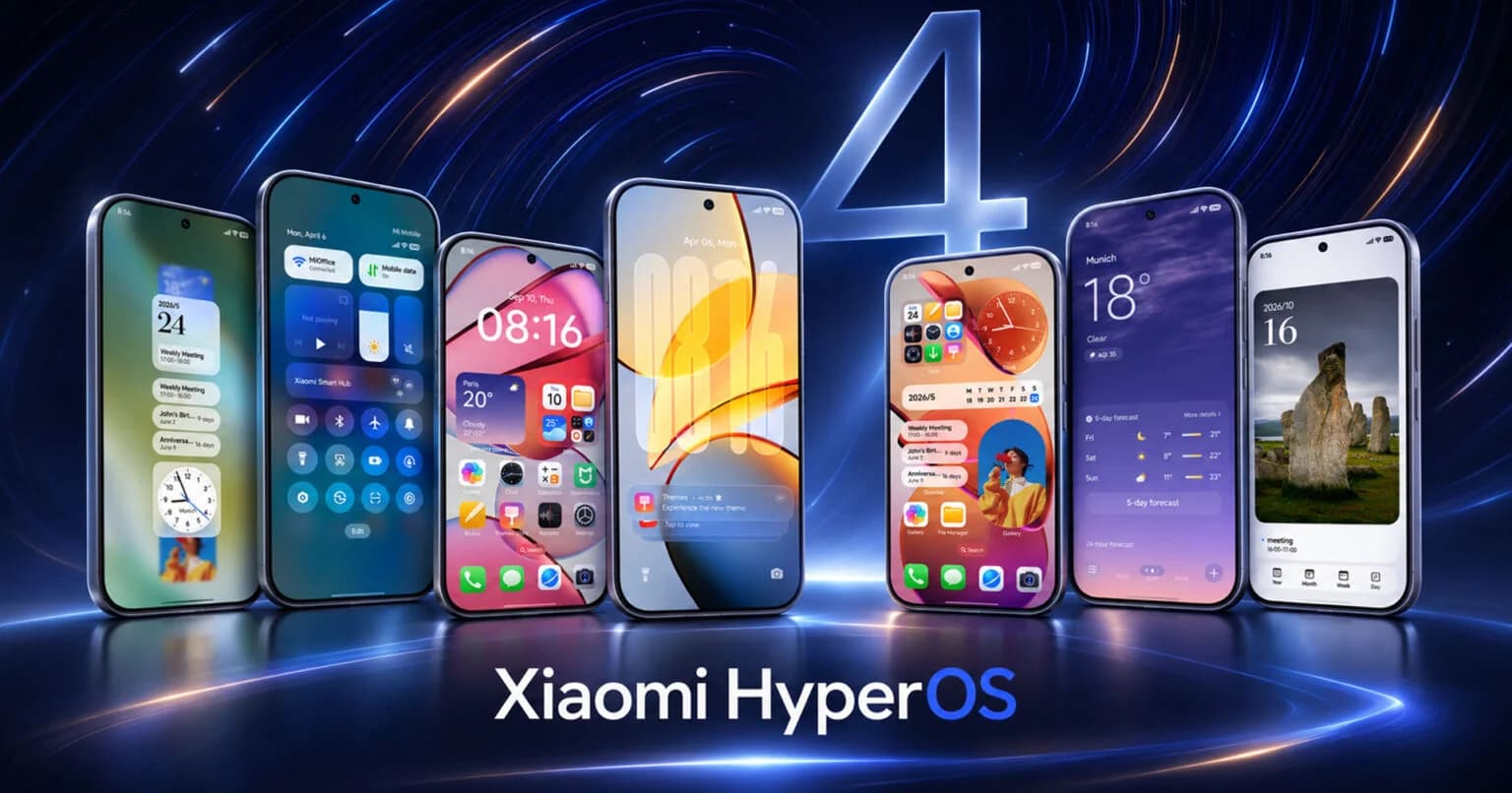
Xiaomi has started rolling out its stable HyperOS 4 update to 82 devices across its Xiaomi, Redmi, and POCO brands. This extensive update will reach phones and tablets in three waves by December 2026, bringing the latest software experience to a wide range of Indian users.
Good news for many Xiaomi, Redmi, and POCO smartphone and tablet owners in India: the stable HyperOS 4 update has begun its rollout. According to a report by Gizmochina, the company is aiming to push this significant software upgrade to a total of 82 devices (67 phones and 15 tablets) across its various sub-brands by the end of December 2026, starting this very month.
This is a broad effort, split into three distinct phases. The first wave, kicking off in early November, targets 33 devices. A second batch of 16 devices is slated for a mid-November release, followed by a final, substantial wave of another 33 devices scheduled for December. This phased approach is common for major OS updates, ensuring stability across a diverse hardware portfolio and regions.
First Wave: Flagships and Popular Mid-Rangers Get HyperOS 4 Early
The initial phase of the HyperOS 4 rollout, already underway in early November, focuses on some of Xiaomi's most recent and popular devices. This includes the flagship Xiaomi 17 Ultra and the rest of the Xiaomi 17 series, which are likely key devices for premium users in India. We also see the Xiaomi 15 and 15 Ultra on this list, indicating a strong commitment to their current-gen premium offerings.
Beyond the flagships, the first wave includes several Redmi Note 15 and Note 17 models. The Redmi Note series has consistently been a powerhouse in the Indian mid-range market, so getting HyperOS 4 early will be a significant boost for a large user base. POCO F8 and X8 variants are also part of this initial rollout, appealing to performance-focused users. Interestingly, the Leica Leitzphone is on the list, along with the Xiaomi Pad 8 series, ensuring tablet users aren't left behind.
Mid-November Brings More Devices
The second wave, expected to start from mid-November, expands the reach of HyperOS 4 to another 16 devices. This group includes the Xiaomi 15T and 15T Pro, which typically offer a blend of flagship performance and more accessible pricing, making them popular choices in India. POCO F7 and F9 series phones are also getting the update, along with some POCO X7 Pro models, catering to a broad spectrum of POCO enthusiasts.
Tablet users can also look forward to HyperOS 4 in this wave, with the Xiaomi Pad 7 series, the compact Xiaomi Pad Mini, and the Redmi Pad 2 Pro all confirmed to receive the update. This shows Xiaomi's dedication to providing a consistent software experience across its mobile and tablet ecosystems.
December Rollout: Older Flagships and Wider Reach
The final and perhaps most impactful wave, scheduled for December, will bring HyperOS 4 to another 33 devices. This phase is notable for its inclusion of older, yet still widely used, flagship devices. The Xiaomi MIX Flip, Xiaomi 14 and 13 series, and Xiaomi 14T and 13T models are all lined up for the update. This is great news for users who invested in previous-generation flagships, as it extends their device's lifespan with the latest software features and security improvements.
The December wave also significantly broadens the reach across the Redmi and POCO portfolios. We'll see the update roll out to the Redmi Note 14 series, various POCO F6, X6, X7, and M-series phones. This covers a vast number of mid-range and budget-friendly devices that are incredibly popular in the Indian market. Additionally, tablets like the Xiaomi Pad 6S Pro 12.4 and more Redmi Pad 2 variants are included, ensuring comprehensive tablet support.
What This Means for Indian Xiaomi, Redmi, POCO Users
This widespread HyperOS 4 rollout is a significant development for Indian consumers. It underscores Xiaomi's strategic shift from MIUI to a unified HyperOS, aimed at creating a more cohesive and interconnected device ecosystem. For many, a new OS version brings expectations of improved performance, a refreshed user interface, enhanced security features, and better integration across Xiaomi's growing range of smart home and personal devices.
The commitment to updating 82 devices, spanning recent flagships to older models and across all three major brands, signals a strong emphasis on long-term software support. In a market like India, where users often hold onto their smartphones for two to three years or more, consistent software updates add substantial value to their investment. It helps keep devices feeling fresh and secure, which is a major purchasing consideration.
Practical Advice for Updating Your Device
One practical detail that early reports, as noted by Gizmochina, are already highlighting is the update package size. If you're upgrading from a stable HyperOS 3 build, the package can be over 8 GB. This is a considerable size, so Indian users should plan to download it over a stable Wi-Fi connection to avoid consuming mobile data allowances. Make sure your device has sufficient storage space free before initiating the update.
Xiaomi has been careful to state that these are estimated timelines. The exact dates for individual devices are not yet locked in, and the rollout can shift depending on region, carrier, specific model, and how development progresses. For users in India, this means patience is key. The best approach is to simply keep an eye on your device's system update section. The phased rollout has already started, so it's a matter of waiting for your turn.
The HyperOS Strategy: Xiaomi's Vision for a Unified Ecosystem
The transition to HyperOS is more than just a software update; it's a strategic move by Xiaomi to consolidate its operating systems across a vast array of devices. This unified approach aims to deliver a consistent, fluid, and secure experience, bridging smartphones, tablets, wearables, and smart home products. For Indian users who often own multiple devices from the Xiaomi ecosystem, this could lead to a more streamlined and integrated digital life.
While the source material does not detail specific new features of HyperOS 4, the very act of such a widespread rollout indicates a mature and stable version of the operating system. It suggests that Xiaomi is confident in its new software foundation and is ready to deliver it to a significant portion of its global, and critically, its Indian user base.
Awaiting Further Announcements
As of now, Xiaomi hasn't made any announcements regarding plans for devices beyond the December rollout. This means if your phone or tablet isn't on the current list of 82 devices, you'll need to wait for further official communications from the company. Given the scale of this initial rollout, it's reasonable to expect more devices to be added to the HyperOS 4 eligibility list in the future.
For those with a compatible device, the stable HyperOS 4 update is an exciting development. It promises to bring the latest system improvements and a refreshed experience to a huge number of users across India. Just remember to use Wi-Fi for the download and keep an eye on your system updates, as the phased rollout unfolds over the coming weeks.