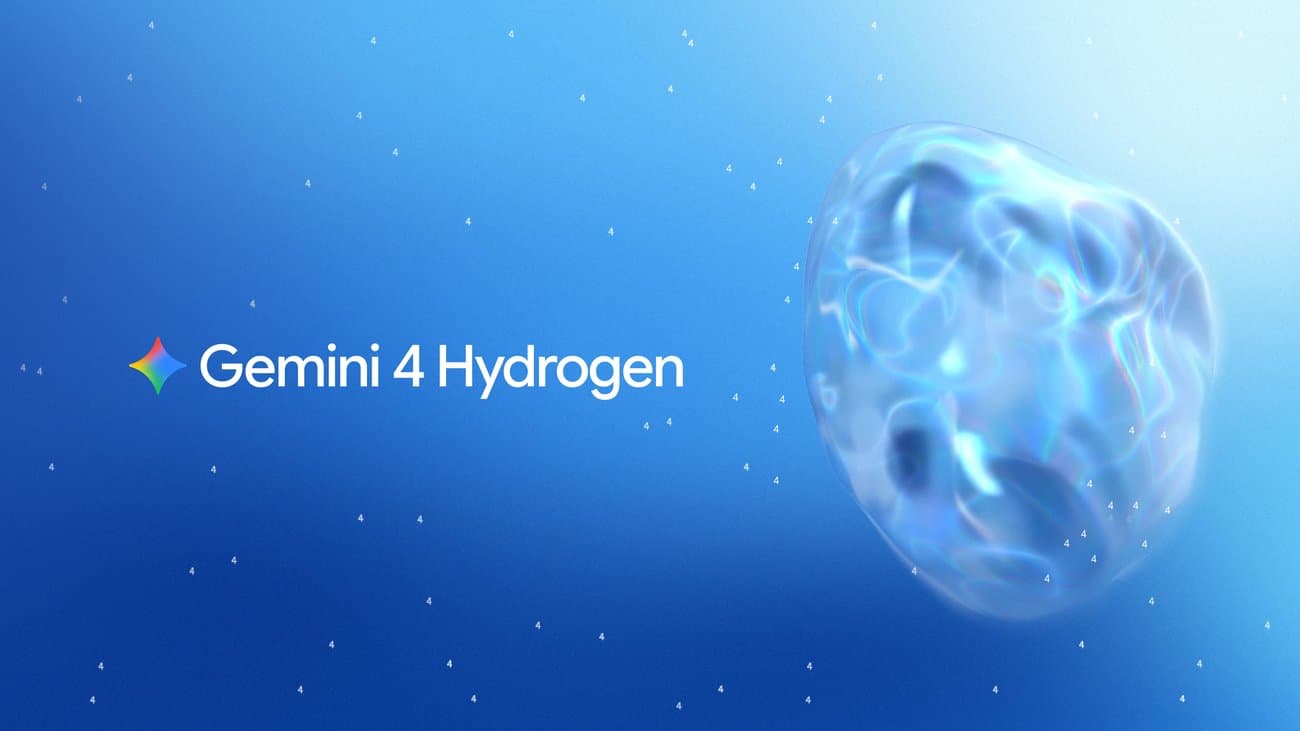
Google has introduced Gemini 4 Hydrogen, a new AI model designed for faster execution across developer, enterprise, and consumer products. It brings significant upgrades to the Gemini app and Google Search.
Google has introduced Gemini 4 Hydrogen, a new model in its Gemini 4 lineup, designed for everyday coding, agentic workflows, and consumer tasks. This new AI model focuses on faster execution and efficiency, aiming to bring Gemini 4 capabilities to a wider audience across Google's developer, enterprise, and consumer offerings.
While existing models like Gemini 4 Carbon and Gemini 4 Argon are built for deep, long-horizon reasoning, Hydrogen is engineered for rapid execution across various workflows. Google stated that Hydrogen surpasses Argon on the Artificial Analysis Intelligence Index, scoring 51 against 50 at its default high thinking level, and reaching 54 at its highest xhigh setting. This indicates a notable step up in quick processing capabilities.
For developers, Gemini 4 Hydrogen offers substantial speed improvements. Google reported that for those migrating from Gemini 3.8 Flash, Hydrogen completes tasks 2.5 times faster at its default high setting. It also more than triples its Terminal-Bench 4.1 score. Beyond speed, the model reduces fabricated claims by over 5x and can adapt when a tool call fails or a search returns no results, which should make development work smoother and more reliable for Indian programmers.
Hydrogen is capable of handling common software development tasks, including repository coding, debugging, issue resolution, codebase questions, and iterative development. Google highlighted that the model makes focused edits without unnecessarily rewriting unrelated files, helping developers produce cleaner, production-ready code. It also matches or outperforms competing models in its class across core developer and enterprise workflows.
Alongside Hydrogen, Google is rolling out Orchestrator in Google Antigravity. This feature automatically coordinates multiple models during a development session. Instead of relying on a single model for an entire task, Orchestrator dynamically switches between models like Gemini 4 Carbon and Hydrogen. On Terminal-Bench 4.0, Orchestrator achieved task success rates close to Carbon while consuming 24% less quota on average and completing tasks 19% faster, which could mean more cost-effective development for businesses.
The benefits of Hydrogen extend to everyday users of the Gemini app as well. Google said Hydrogen improves instruction following, tool usage, and multi-turn conversations, helping users achieve reliable results with less back-and-forth. This means your interactions with the Gemini app should feel more fluid and efficient.
Google Search is also getting a significant upgrade, which the company calls its biggest model enhancement yet. Hydrogen improves how Search understands complex and nuanced questions, including queries with multiple parts, typos, and highly specific instructions. This could lead to more accurate and relevant search results for Indian users, especially for those complex queries we often type in.
Google confirmed that Hydrogen incorporates its latest Gemini 4 safety and security improvements. This includes built-in training protections combined with real-time safeguards to mitigate misuse and misalignment. The company also reported zero deceptive reasoning edits across more than 200,000 audited turns, which is good for trust in AI responses.
Pricing for Gemini 4 Hydrogen is set at $1.50 per million input tokens and $7.50 per million output tokens across its entire 1 million-token context window. The model is rolling out globally starting today across Google’s developer, enterprise, and consumer products.
Developers interested in diving deeper can consult the Gemini API What’s New Guide for model details, setup instructions, and thinking-level controls. More information about Orchestrator and its integration with Hydrogen is also available on the Google Antigravity blog.