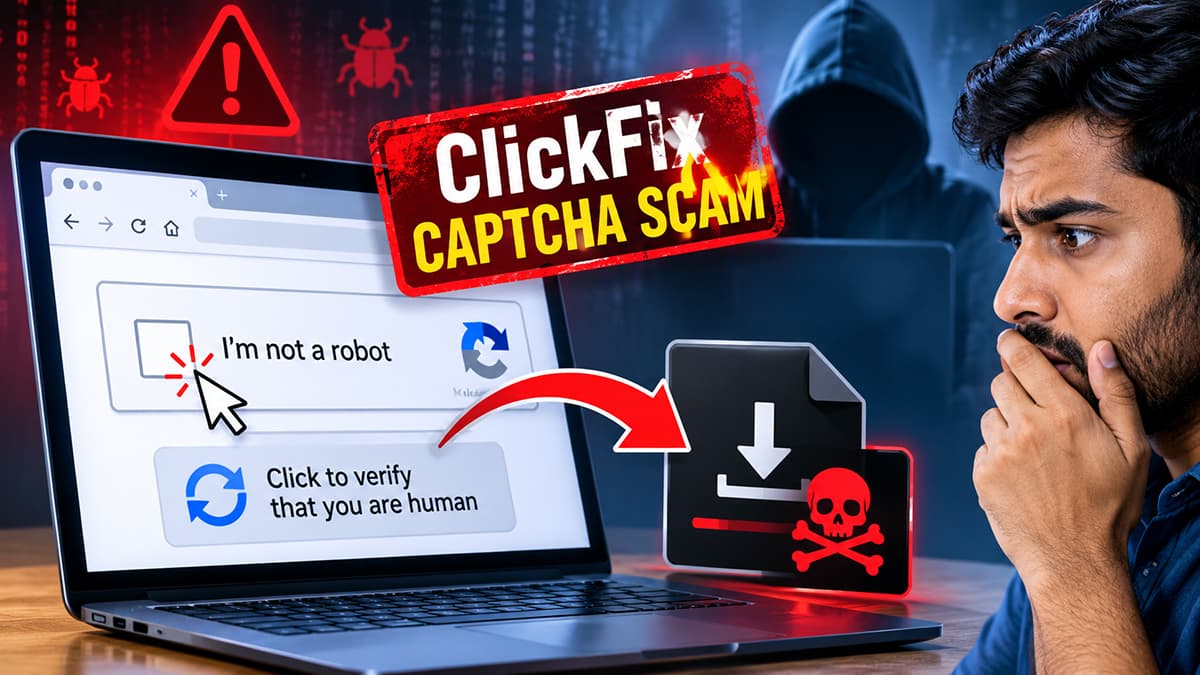
A new cyber scam called ClickFix is tricking Indian internet users with fake CAPTCHA pages to install malware. It exploits common online verification methods, posing a risk to personal data.
Cybercriminals are employing a sophisticated new scam, dubbed ClickFix, to trick internet users into unknowingly installing malware on their computers. This fraudulent scheme impersonates legitimate human verification prompts, urging victims to execute keyboard shortcuts and paste malicious code into their systems.
According to Mint Technology, which reported on this emerging threat, the technique has become a significant method for distributing malware. The scam specifically preys on the public's familiarity with online verification systems, often appearing on websites a user visits.
How the ClickFix Scam Works
Unlike traditional CAPTCHA tests that ask users to identify objects or type distorted text, ClickFix systems use a user's keyboard interactions to determine if they are human. This approach enables attackers to bypass typical caution.
The attack sequence begins when a user interacts with a fake CAPTCHA checkbox on a webpage. Without the user's knowledge, the malicious command is then copied and stored in the computer's clipboard. The victim is then instructed to press `Windows + R` to open the Run dialogue box, followed by `Ctrl + V` to paste the copied command, and finally `Enter` to run it. Executing this command deploys malicious code onto the computer, which can then download and install further harmful software silently.
Microsoft's security research team, in an analysis published on 21 August 2025, also documented how ClickFix campaigns leverage fake CAPTCHA pages and browser error messages to persuade victims into executing these commands. The Guardian also reported on this on 15 November, detailing the clipboard aspect of the attack.
The Malware's Reach and Impact
Once the malicious code runs, it can establish communication with an attacker-controlled server to retrieve additional malicious files or scripts. Depending on the specific campaign, these can be designed to steal sensitive user data, including passwords, browser information, and other personal details.
This method has been linked to the distribution of information-stealing malware, such as Lumma Stealer. It has also been noted in a joint advisory from the FBI, CISA, the US Department of Health and Human Services (HHS), and the Multi-State Information Sharing and Analysis Center (MS-ISC). Their July 2025 advisory on Interlock ransomware described how attackers use fake CAPTCHA prompts to trick victims into executing Base64-encoded PowerShell commands via the Windows Run dialogue.
ClickFix attacks are not limited to CAPTCHA pages either. Microsoft has identified campaigns impersonating browser crash messages, document services, and even platforms like Discord. These pages are designed to look like typical, legitimate websites to make the instructions appear genuine.
Protecting Yourself from ClickFix
Cybersecurity experts offer clear advice to Indian internet users to avoid falling victim to ClickFix:
- Never execute commands copied from unfamiliar websites. Legitimate CAPTCHA verification should not require you to open Windows Run, PowerShell, or Terminal and paste commands.
- Keep your security software up to date.
- Avoid following unexpected troubleshooting instructions that appear on web pages.
What to Do if You've Fallen Victim
If you suspect you have already carried out the instructions from a ClickFix scam, immediate action is crucial:
- Contact your bank to alert them, especially if any financial information might have been compromised.
- Change your passwords, prioritising key email and banking accounts.
- Seek professional help to inspect and sanitise your compromised device.