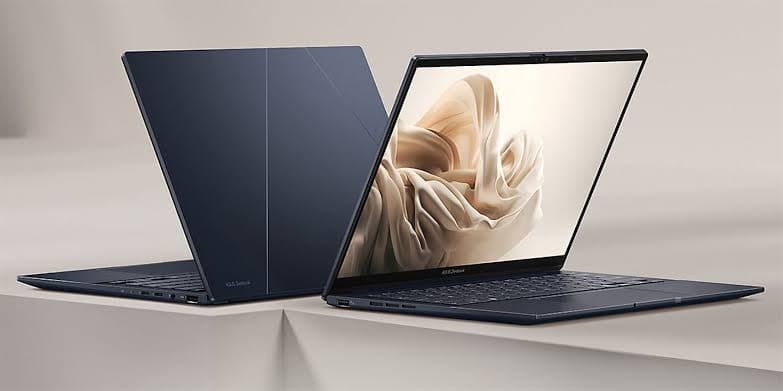
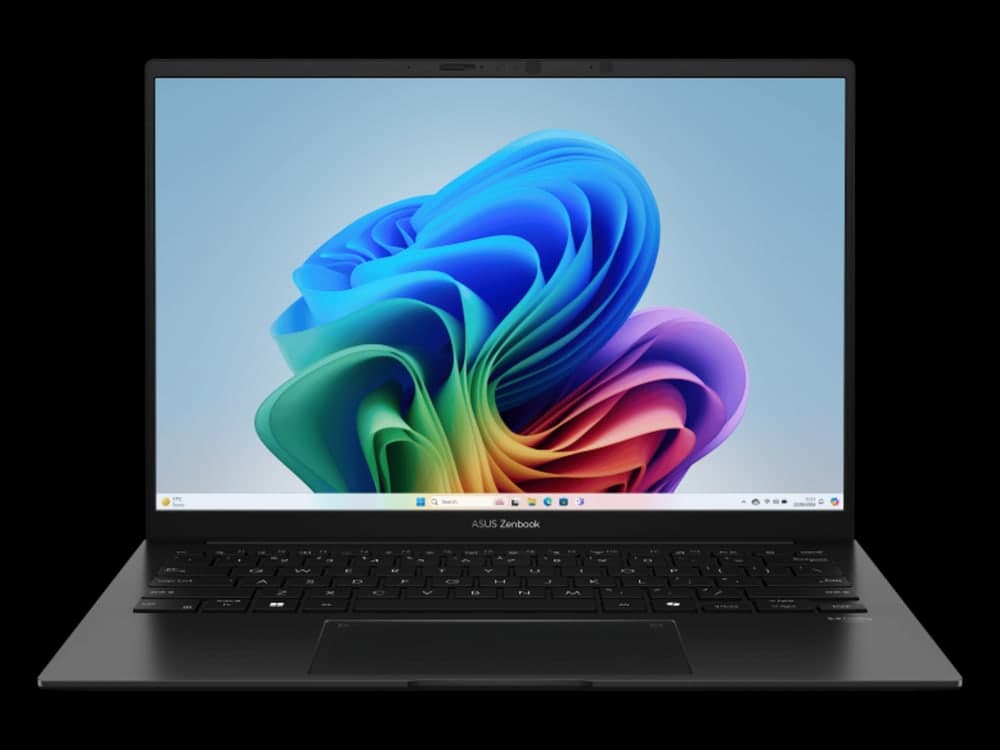
ASUS has launched its new Zenbook 14 laptop series in India, offering buyers a choice of Intel, AMD, and Snapdragon X processors with varying display and battery specifications. Prices start from Rs 1,36,990 for the Snapdragon X variant.
ASUS has officially launched the new Zenbook 14 series in India, bringing a range of processor options from Intel, AMD, and Qualcomm's Snapdragon X platform to its premium thin-and-light laptop lineup. This gives Indian buyers significant choice when it comes to performance and portability.
The new Zenbook 14 models feature a Ceraluminum construction and boast up to a stunning 3K 120Hz OLED touchscreen. On-device AI workloads are a focus, with NPU performance rated up to 50 TOPS, depending on the configuration.
ASUS Zenbook 14: India Pricing and Availability
For Indian consumers, ASUS has priced the new Zenbook 14 variants as follows:
- The Snapdragon X X1 26 100 powered UX3480QA starts at Rs 1,36,990.
- The AMD Ryzen AI 7 345 equipped UX3480KA is priced at Rs 1,56,990.
- The top-end Intel Core Ultra 9 386H configuration (UX3480AA) carries a price tag of Rs 1,67,990.
These prices position the Zenbook 14 series firmly in the premium segment, competing with other high-end ultrabooks in the Indian market.
Processor Choices and AI Capabilities
ASUS is offering three distinct processor platforms in the Zenbook 14, catering to different user needs:
- Intel Core Ultra 9: The UX3480AA variant features up to an Intel Core Ultra 9 386H processor with 16 cores and speeds of up to 4.9GHz. Its integrated Intel NPU is capable of up to 50 TOPS, promising robust performance for AI tasks.
- AMD Ryzen AI 7: The UX3480KA model uses an AMD Ryzen AI 7 345 processor, offering six cores, 12 threads, and speeds up to 4.6GHz. This variant also includes an AMD XDNA NPU rated at up to 50 TOPS.
- Snapdragon X X1: The UX3480QA variant is powered by the Snapdragon X X1 26 100 processor, which has eight cores and speeds up to 2.97GHz. Its NPU is rated at up to 45 TOPS. This marks a significant entry for Qualcomm's new laptop chip into the Indian market.
All three configurations come with 16GB LPDDR5X RAM and 512GB PCIe 4.0 SSD storage, providing a solid base for demanding applications and fast data access.
Varying Display Options
The display specifications are a key differentiator across the Zenbook 14 variants, according to MySmartPrice. The Intel model gets the most premium panel:
- The UX3480AA (Intel) features a 14-inch 3K OLED touchscreen with a 120Hz refresh rate, 2,880 x 1,800 resolution, and an impressive 1,100 nits peak brightness. It also offers 100% DCI-P3 colour coverage and a 0.2ms response time, making it ideal for creative professionals or users who prioritize visual fidelity.
- The UX3480KA (AMD) comes with a 14-inch 60Hz OLED touchscreen with FHD+ resolution.
- The UX3480QA (Snapdragon) features a 14-inch 60Hz OLED display with a 1,920 x 1,200 resolution.
Both the AMD and Snapdragon variants still offer 100% DCI-P3 colour coverage, ensuring vibrant and accurate colours despite the lower resolution and refresh rate compared to the Intel model.
Ceraluminum Design and Durability
A major design highlight of the new Zenbook 14 is its Ceraluminum material construction. ASUS claims this ceramic-aluminium build is 30% lighter and three times stronger than standard aluminium, while also providing resistance against scratches, shocks, smudges, and everyday wear. The laptop has been tested against the US MIL-STD-810H military-grade standard, suggesting robust durability.
The Zenbook 14 is remarkably thin at 1.39cm at its thinnest point and weighs as little as 1.1kg, depending on the chosen configuration, making it highly portable. It will be available in three colours: Arctic Blue, Komodo Coral, and Zabriskie Beige.
Battery Life and Connectivity
ASUS claims the Zenbook 14 can deliver up to 33 hours of battery life, though this will likely vary significantly by configuration and usage. The laptop supports USB-C fast charging, with ASUS claiming up to 50% charge in just 30 minutes.
Interestingly, the battery capacities differ: the Intel and AMD variants feature a 70Wh battery, while the Snapdragon version gets a smaller 50Wh unit. All models, however, utilise a 68W USB-C fast-charging adapter.
For connectivity, the laptops include Wi-Fi 6E and Bluetooth, along with USB-C, USB-A, and HDMI ports. The Intel model offers additional Thunderbolt 4 support, while the AMD variant features USB 4.
ZenMouse MD202 Accessory Also Launched
Alongside the Zenbook 14, ASUS also introduced the ZenMouse MD202. This mouse features a Ceraluminum top cover designed to match the laptop's aesthetic. It supports both Bluetooth and 2.4GHz wireless connectivity, allowing it to pair with up to four devices. The mouse includes a Track-on-glass sensor, PTFE feet, and micro switches rated for up to 50 million clicks. The ZenMouse MD202 supports USB-C fast charging, with ASUS claiming up to 16 hours of use from just one minute of charging. It is priced at Rs 6,999 in India.
What This Means for Indian Buyers
The new ASUS Zenbook 14 series offers Indian buyers a compelling choice in the premium laptop segment, especially with the introduction of Snapdragon X. For those prioritising raw CPU performance and the best display, the Intel Core Ultra 9 variant with its 3K 120Hz OLED panel seems like the clear winner, though it comes at the highest price point. Creative professionals would likely find this model most appealing.
The AMD Ryzen AI 7 option provides a balanced performance profile, while the Snapdragon X variant, being the most affordable, will be interesting to watch. Its reported efficiency and potential for extended battery life (despite a smaller battery unit) could make it a strong contender for users who prioritise portability and all-day usage, assuming its real-world performance matches expectations for everyday tasks in India. The claimed 33-hour battery life, though configuration-dependent, is a significant draw for the Snapdragon X version on paper.
The pricing for the Snapdragon X model at Rs 1,36,990 makes it a potentially disruptive option if its performance on Windows applications is robust. However, as with any new architecture, Indian buyers might want to wait for early reviews focusing on software compatibility and sustained performance before making a decision.