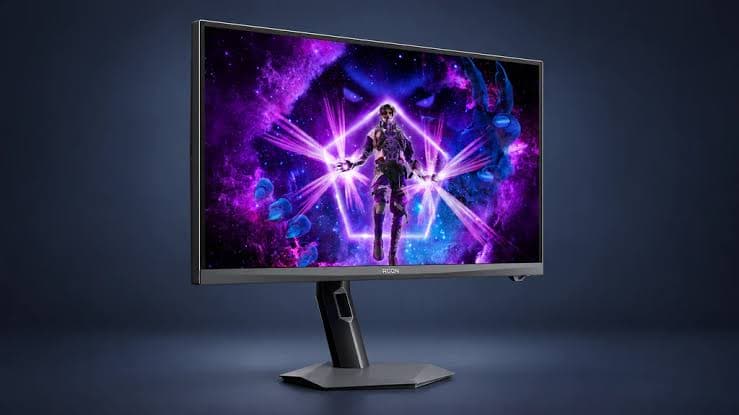
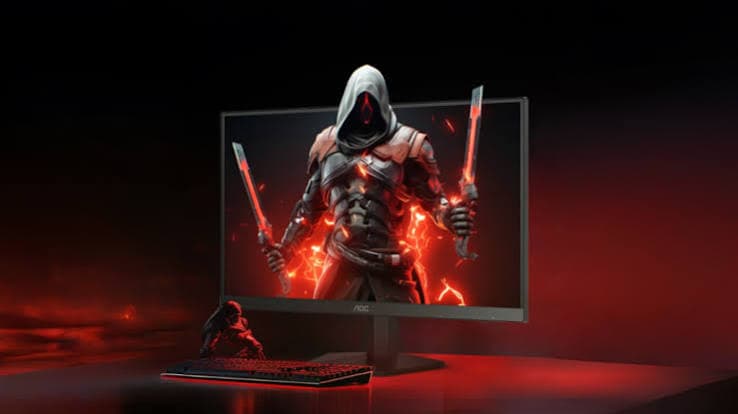
AOC has launched a new 27-inch QD-Mini LED gaming monitor in China, the Agon Pro AGP277QKM, featuring an impressive 425Hz refresh rate. This guide explores its features and what to look for when buying a high-performance monitor in India.
AOC has introduced a new high-end gaming monitor, the Agon Pro AGP277QKM, in China. This 27-inch display stands out with its QD-Mini LED panel and an eye-watering 425Hz refresh rate, a specification that could redefine competitive gaming visuals.
As Notebookcheck reported, the AGP277QKM packs a 2560x1440 pixel resolution. Its combination of a high refresh rate and QHD resolution positions it as a top-tier option for serious gamers. While it's currently a China-exclusive, AOC has indicated it will likely launch in the global market soon. This makes it worth considering what such a monitor could mean for the Indian market.
A Closer Look at the Agon Pro AGP277QKM's Core Specs
The headline feature of the Agon Pro AGP277QKM is undoubtedly its 425Hz refresh rate. For context, most high-end gaming monitors in India today offer 144Hz, 240Hz, or sometimes 360Hz. A 425Hz panel delivers an incredibly smooth visual experience, reducing motion blur significantly. This can give competitive players a noticeable edge in fast-paced games where every millisecond counts, allowing for quicker reactions to on-screen events.
Beyond raw speed, the monitor's QD-Mini LED technology is crucial. It features 1,152 backlight zones and 4-level dimming modes. This level of local dimming is key to achieving deep blacks and bright whites, crucial for a high dynamic range (HDR) experience. The monitor boasts VESA DisplayHDR1000 certification and a 1,200 nits peak brightness, suggesting it will offer a vibrant and immersive HDR content viewing experience, whether you're gaming or watching movies.
Response time is another critical factor for competitive gaming, and the AGP277QKM aims to excel here too. It's rated for 0.5ms GtG (Grey-to-Grey) and an even faster 0.3ms MPRT (Moving Picture Response Time). These figures indicate minimal ghosting and blur, contributing to sharper images during rapid movement. The monitor also supports Adaptive-Sync and AMD FreeSync, ensuring tear-free gameplay by synchronizing the display's refresh rate with your GPU's frame rate.
For those who dabble in creative work, the monitor's color performance looks promising. AOC specifies 100% sRGB color coverage (based on CIE 1931) and 98% DCI-P3 coverage (based on CIE 1976). This broad color gamut means the monitor can accurately reproduce a wide range of colors, making it a decent fit for photo editing or video work when you're not busy fragging opponents. It also includes practical features like Picture-in-Picture (PIP) and Picture-by-Picture (PBP) modes, flicker-free technology, and customizable shortcut keys.
Price and Indian Availability: The Big Unknown
In China, the AOC Agon Pro AGP277QKM launched with a price of CNY 3,254, which translates to about $486. If we convert that directly to Indian Rupees, without accounting for import duties, GST, and local distribution costs, it would be roughly around ₹40,000. However, actual Indian pricing, if it launches here, would likely be significantly higher, potentially placing it in the ₹50,000-70,000 bracket, depending on market positioning and competition. There's no confirmed date for an Indian launch, only the general statement that it will likely go global soon.
Guide: Choosing a High-Performance Gaming Monitor in India
The AOC Agon Pro AGP277QKM pushes boundaries, but for Indian buyers considering a high-end gaming monitor, it's essential to understand what these specs mean and how to choose the right display for your needs right now. Here’s a breakdown of key factors:
Resolution and Screen Size: Finding Your Sweet Spot
Most gamers look at 27-inch or 32-inch monitors. The AOC AGP277QKM is a 27-inch QHD (2560x1440) panel. QHD is often considered the sweet spot for gaming, offering a sharper image than Full HD without the extreme GPU demands of 4K. Achieving high frame rates at QHD is more feasible for many mid-to-high-end graphics cards. For 4K gaming, you'll need a top-tier GPU to push high refresh rates, and the visual differences on a 27-inch screen might be less pronounced compared to a larger display.
Refresh Rate: The Need for Speed (and Smoothness)
While 425Hz is impressive, it's worth asking if it's necessary for you. Most competitive gamers find 144Hz to 240Hz provides a significant improvement over standard 60Hz. Stepping up to 360Hz offers marginal gains for all but professional esports players. A 425Hz monitor is squarely aimed at the absolute top tier of competitive gaming, where every frame can matter. For casual or even serious non-pro gamers, a 240Hz or 360Hz QHD monitor will likely provide an excellent and equally immersive experience without the added cost.
Panel Technology: IPS, VA, OLED, and Mini LED Explained
-
IPS (In-Plane Switching): Known for excellent color accuracy and wide viewing angles. Often a popular choice for gaming due to good response times.
-
VA (Vertical Alignment): Offers superior contrast ratios and deeper blacks compared to IPS, though viewing angles can be narrower and response times historically a bit slower. Many curved monitors use VA panels.
-
OLED (Organic Light-Emitting Diode): Each pixel emits its own light, allowing for perfect blacks, infinite contrast, and extremely fast response times. They are generally the most expensive but offer the best picture quality. Burn-in risk is a consideration, though greatly reduced in modern panels.
-
Mini LED: This is what the AOC AGP277QKM uses, often combined with Quantum Dot (QD-Mini LED). Mini LED displays use thousands of tiny LEDs for backlighting, arranged into numerous local dimming zones. This allows for precise control over brightness and contrast across different parts of the screen, mimicking some benefits of OLED for HDR content without the same cost or burn-in concerns.
HDR Capabilities: More Than Just Brightness
HDR (High Dynamic Range) significantly improves the visual experience by expanding the contrast ratio and color palette. VESA DisplayHDR certifications (like DisplayHDR 400, 600, 1000) indicate the display's performance. DisplayHDR 1000, like on the AOC monitor, means a peak brightness of at least 1,000 nits and robust local dimming, delivering a truly impactful HDR experience. Cheaper HDR monitors (DisplayHDR 400 or 600) may offer less impressive results without sufficient local dimming zones.
Response Time and Adaptive Sync
Look for low GtG (Grey-to-Grey) or MPRT (Moving Picture Response Time) figures. For competitive gaming, 1ms or less is ideal to minimize ghosting. Adaptive Sync technologies like AMD FreeSync and NVIDIA G-Sync (or G-Sync Compatible) are also vital. They eliminate screen tearing and stuttering by dynamically adjusting the monitor's refresh rate to match the GPU's output. Ensure your chosen monitor supports the adaptive sync technology compatible with your graphics card.
Ergonomics and Extra Features
Don't overlook the stand. A fully adjustable stand (height, tilt, swivel, pivot) is crucial for comfort during long sessions. Other useful features include USB hubs for peripheral connectivity, Picture-in-Picture/Picture-by-Picture modes for multitasking, and flicker-free backlighting to reduce eye strain.
Monitors Available in India: Alternatives and Comparisons
While the 425Hz QD-Mini LED AOC Agon Pro AGP277QKM isn't in India yet, the market offers several excellent high-performance gaming monitors. For instance, if you're targeting QHD resolution with a high refresh rate, brands like LG, Samsung, Asus, Acer, and MSI offer a range of 27-inch and 32-inch IPS or VA panels with 144Hz, 240Hz, or even 360Hz refresh rates. Many of these come with AMD FreeSync or are NVIDIA G-Sync Compatible.
For those prioritizing Mini LED or OLED technology for superior HDR and contrast, Samsung's Odyssey Neo series often features Mini LED, though usually at higher price points and typically with slightly lower refresh rates than 425Hz. Dell Alienware and LG also offer impressive OLED gaming monitors in India, delivering incredible visuals and response times, though they come with a premium price tag.
The pricing for these high-end options in India typically ranges from ₹30,000 for good 144Hz QHD displays to well over ₹80,000 for top-tier 4K 144Hz or QHD 240Hz/360Hz OLED/Mini LED models. You'll find options that provide VESA DisplayHDR 600 or even DisplayHDR 1000, particularly in the Mini LED and OLED segments.
Should You Wait for the AOC Agon Pro AGP277QKM?
Honestly, for most Indian gamers, waiting for the AOC Agon Pro AGP277QKM might not be the most practical choice. Its 425Hz refresh rate is bleeding-edge, but the gains over 240Hz or 360Hz are minimal for all but the most elite competitive players. The unknown launch date and potentially high price point in India mean you could be waiting a long time for a feature that might offer diminishing returns for your specific use case.
If you're a professional esports player with a powerful PC, and money is no object, then perhaps this monitor is worth keeping an eye on. For everyone else, the Indian market already offers a fantastic selection of QHD and 4K gaming monitors with high refresh rates, excellent panel technology (including Mini LED and OLED), and robust HDR capabilities that are available right now. You can get an incredible gaming experience without holding out for unconfirmed releases.